Ask an Iraqi abroad what dish they miss and the answer, more often than not, is masgouf. It is a whole river fish, split open, salted, and roasted upright beside a wood fire until the skin crisps and the flesh turns smoky and soft.
Baghdad built an entire riverside dining culture around this one preparation, and it now travels wherever Iraqis do, including to Dubai. This guide explains what the dish is, how it is cooked, why it takes as long as it does, and how to eat it the way it was meant to be eaten.
What Masgouf Actually Is
Masgouf is widely called the national dish of Iraq, and it earns the title by age alone. The technique goes back to Mesopotamia, where the Tigris and Euphrates handed fishermen their dinner and the riverbank handed them the fire.
The idea is almost stubbornly simple. A whole freshwater fish is opened flat, seasoned lightly, and slow-roasted next to open flames rather than over them, then finished briefly on the embers.
The cultural journalafikra records that the name itself is thought to come from the act of opening the fish up like a book before it meets the fire, and that the traditional catch was river carp, the bunni and kattan of the Tigris basin. The dish is older than the city that made it famous.
Baghdad gave it the stage anyway. The riverside restaurants of the Abu Nuwas district turned the preparation into an institution, with fires burning along the Tigris and whole evenings arranged around the fish standing beside them.
What separates it from every other grilled fish is the method, not the ingredients. Fire, salt, patience, and a very particular cut do all the work.
The Fish: Carp Traditionally, and What Is Used in the Gulf Instead
The classic masgouf fish is river carp of the Tigris basin, prized in Iraq for its size and its fat. That fat is the point, since a lean fish would dry out long before the slow roast finished its work.
Outside Iraq, the carp rarely makes the journey, so kitchens adapt. In the Gulf, cooks reach for large, fatty fish that behave the same way beside a fire, and the results stay honest to the original when the fish is fresh and generous.
Freshness matters more than species, and always has. The riverside tradition began with fish pulled from the water and cooked within the hour, which is a standard no frozen fillet can imitate.
If you order it in Dubai, ask what fish the kitchen uses and when it arrived. A confident answer is half the meal. Size matters too, since the tradition assumes a fish large enough to feed the table, and a kitchen that asks how many are coming before recommending one is doing it properly.
The Butterfly Cut, and Why It Matters
The cut is the signature move of the whole dish. The fish is split along the back, not the belly, and opened flat into one broad piece with the skin holding it together.
This shape changes everything about how the fish cooks. Opened flat, the flesh faces the fire evenly across its whole surface, the smoke reaches every part, and the skin on the back becomes a shield that keeps the moisture in.
The cut also changes how the fish is eaten. A butterflied fish arrives as one broad shared centerpiece rather than a portion, and everyone at the table works from the same open fish.
Watch a practiced hand make the cut and you understand the craft involved. One clean line, no wasted movement, and a fish transformed into something built for fire and company.
Home cooks abroad adapt the cut to ovens and grills, and the flat shape still does its work there. The fire is harder to replicate than the knife.
Cooked Upright Beside an Open Fire, Not Over It
Here is the detail that surprises everyone the first time: the fish is not grilled over coals. The opened fish is fixed upright on stakes or a frame, arranged in a ring around a wood fire, facing the flames the way you might face a fireplace.
Cooking beside the fire rather than above it means the fish roasts in radiant heat and smoke instead of scorching on a grate. The heat arrives steadily, the fat renders slowly, and the wood smoke settles into the flesh rather than rushing past it.
Near the end, the fish is often laid briefly over the embers to crisp the skin and finish the surface. That final touch adds the char; the long upright roast adds everything else.
The upright ring of fish around a fire is also simply a beautiful thing to see. It is cooking as theater, and Baghdad’s riverside restaurants have staged it for generations. The wood matters as much as the arrangement, since a clean-burning hardwood gives steady heat and honest smoke, and every masgouf house guards its opinion on which wood is best.
Why It Takes as Long as It Does
The dish is slow because the method refuses to be hurried. Radiant heat works gently, a large fish is thick, and the whole point is to render the fat without drying the flesh.
Depending on the size of the fish and the mood of the fire, the roast can run well past an hour. Rushing it with fiercer flames only burns the surface while the center stays behind.
The waiting is not a flaw in the experience; it is the experience. The fish goes up, the bread and salads come out, the conversation starts, and dinner arrives when the fire says so.
Treat the wait as part of the meal and the whole ritual makes perfect sense. Order it when the evening has time to spare, never when it does not.
The Restraint of the Seasoning
For a dish this famous, the seasoning list is almost comically short. Salt is the constant, with tamarind, turmeric, or a little olive oil appearing in some kitchens and nothing at all in others.
The restraint is deliberate, and it is the mark of the whole tradition. Wood smoke and rendered fat carry the flavor, and heavy spicing would only stand in their way.
What arrives alongside does the decorating instead. Chopped onion, tomato, pickles, fresh herbs, and lemon sit around the fish, so every bite gets built by the eater rather than the cook.
This is a different philosophy from the spice-forward dishes people expect from the region’sfamous Middle Eastern food traditions. The tradition argues that when the fish and the fire are right, the cook’s best move is to step aside.
How Masgouf Is Served and Shared
This is a dish that never arrives as a neat fillet on a plate. The whole opened fish is carried to the table, usually on a broad tray, skin crisp and flesh steaming, with warm bread stacked beside it.
Eating it is communal by design. Pieces are lifted straight from the fish with bread or fingers, wrapped with onion and tomato, brightened with lemon, and passed around until the frame is picked clean.
The bread deserves its own mention, since hot flatbread pressed against smoky fish is half the pleasure of the dish. Rice sometimes appears, but bread is the traditional partner. Sweet black tea usually closes the meal, poured small and strong while the last of the fish disappears.
Come with company, and come hungry. A proper fish feeds a table, and a table is exactly what it was designed for.
Where Masgouf Sits Against the Rest of the Iraqi Table
The grilled fish may be the headline, but the Iraqi table around it runs deep. Slow stews, dolma, kebabs, and pickles on every side make Iraqi cooking one of the region’s most generous and least exported cuisines. Tashreeb soaks bread in rich broth, kubba wraps spiced meat in rice or bulgur shells, and the saffron rice with golden vermicelli anchors everything around it.
On that table, masgouf plays the role of the occasion dish. Everyday Iraqi cooking leans on the stews and rice; the fish beside the fire is what families gather for, celebrate over, and serve when guests matter.
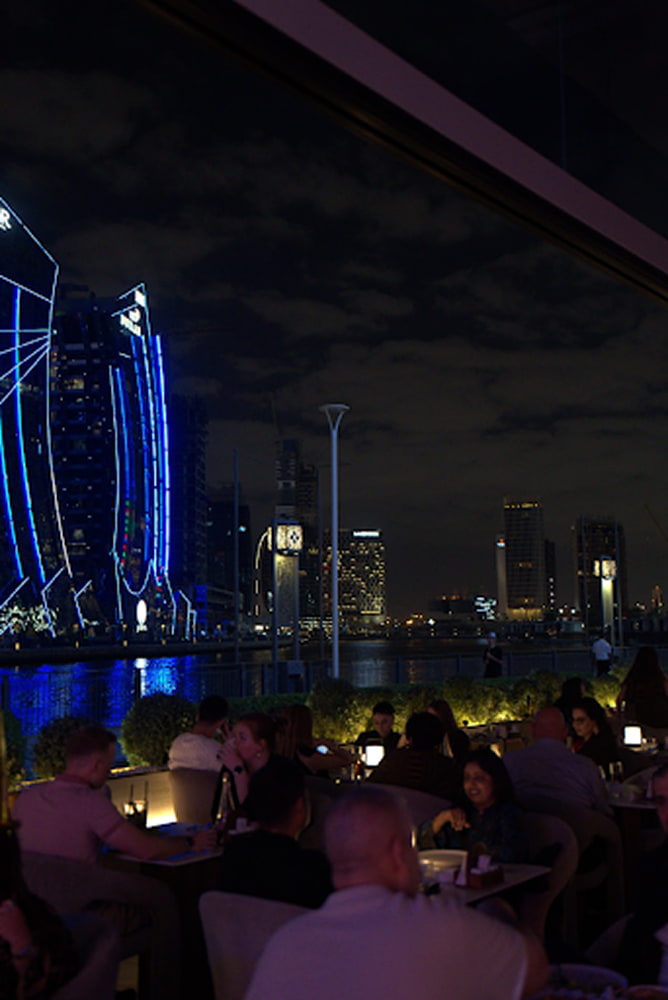
Finding that full table outside Iraq takes some looking, which is exactly what makes anIraqi restaurant in Business Bay worth seeking out. At Babati, the Iraqi side of our kitchen sits beside the Lebanese, and guests from Baghdad tell us which dishes taste like home.
Judge an Iraqi kitchen by its rice and its patience. Both habits are exactly what the fire demands, and a kitchen that has one usually has the other.
Who This Dish Suits, and When to Order Something Else
This dish suits a table with time: a family gathering, a slow dinner with friends, an evening where the meal is the plan rather than a stop on the way to one. It rewards groups, appetite, and curiosity about eating with your hands.
Order something else if you are eating alone, eating fast, or want a boneless, fuss-free fillet. A whole river fish carries bones and asks for attention, and there is no shame in choosing a grill plate or a stew when the evening calls for ease.
The dish also divides people on texture, since river fish is richer and softer than sea bass. Adventurous eaters love it on the first try; cautious ones should share someone else’s before committing to a whole fish. The middle path is a table that orders the fish alongside grills, so every appetite has a home.
A Fish Worth the Fire
Strip away the history and the dish still stands on its own logic: a fat fresh fish, a patient fire, salt, smoke, and bread. Everything else at the table is decoration around a very old and very confident idea.
That confidence is why the dish survived every century thrown at it, and why Iraqis abroad measure restaurants against their memory of it. Few dishes carry a country so completely, and fewer still taste better for the waiting.
If reading this has put smoke in your mind, Babati on the Dubai Water Canal cooks the Iraqi table alongside the Lebanese one, and our team will happily talk you through what the kitchen is preparing that day. Call ahead or message us on WhatsApp and ask about the Iraqi dishes before you visit. Then come back another morning for anIraqi breakfast in Dubai and meet the gentler side of the same table.