
When people search private dining Dubai, they usually mean one of three quite different things, and venues quietly count on the confusion. A private room, a screened section, and a full buyout are separate products with separate rules.
Committing before you know which one you are buying is how private evenings go wrong. This guide sets out the formats, the service, the discretion questions, and the details worth agreeing in advance, so the room you book is the room you imagined.
What Private Dining Dubai Actually Means, and the Three Formats Venues Offer
Private dining is any arrangement where your party eats apart from the main floor, with its own service. Beyond that single idea, the market splits three ways.
The first format is the dedicated private room: a separate space with a door, its own table, and often its own sound. The second is the screened or sectioned area, part of the main floor set apart by partitions, planting, or distance. The third is the full or partial buyout, where the venue, a terrace, or an entire floor becomes yours for the evening.
Each format trades something for something. Rooms give the most privacy and the least atmosphere; sections keep the venue’s energy but leak sound and sightlines; buyouts give total control and demand the most planning.
Name the format before discussing anything else with a venue. Every later question, from menus to minimums, depends on which of the three you mean.
Hybrids exist as well, and good venues offer them without being asked. A section for dinner with the terrace opened to your party afterward is a common shape for evenings that begin formal and end social.
A Dedicated Room Versus a Screened Section Versus a Full Buyout
Choosing between the three formats comes down to what the evening is for. The occasion decides, not the venue’s sales pitch.
A dedicated room suits business dinners, family occasions with speeches, and any gathering where the conversation is the point. A screened section suits birthdays and social dinners, where you want the buzz of the restaurant with a boundary around your party. A buyout suits landmark events: a large family celebration, a corporate evening, a proposal that needs the whole terrace.
Scale matters as much as purpose. Rooms in this city typically hold smaller parties, sections flex with the floor plan, and buyouts start making financial sense only once your guest list approaches the venue’s capacity.
Visit before you commit, whichever format you choose. A room that photographs well can sit beside the kitchen door, and only your own eyes catch that.
How Menus Are Built for a Private Table
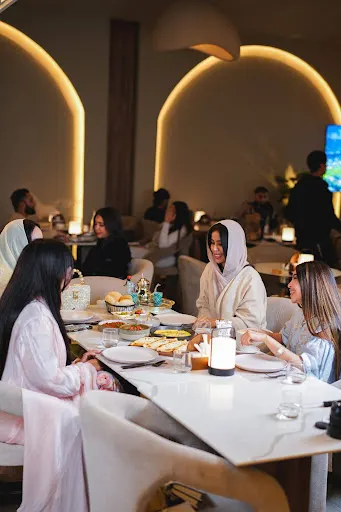
Private tables rarely order from the standard menu on the night, and that is a feature rather than a restriction. A set or semi-set menu lets the kitchen serve your whole party together, hot and at pace.
A good venue builds that menu with you in advance. Expect a conversation covering courses, dietary needs across the party, and one or two choices per course rather than the full card.
The strongest private menus lean on what the kitchen already does best rather than novelty. If the house is known for its charcoal work, build the evening around it, the way thebest grill restaurant in Dubai conversations always come back to the grill itself.
Ask for a tasting or at least a full written menu before the event. Surprises belong to the guests, never to the host.
Plan the drinks alongside the food rather than after it. Welcome drinks, juices, coffee service, and the after-dinner round each need deciding, and a good venue proposes the sequence for you.
Dedicated Service, and What a Good Venue Assigns You
Service is the real difference between a private table and a big reservation. The format only draws the boundary; the staffing decides how the evening runs inside it.
A serious venue assigns your party its own point of contact for the planning and a dedicated server or team on the night. One name before the event, one face during it, and the host never has to leave the table to fix anything.
Ask directly who will run your evening and how many staff are assigned to the room. Vague answers here predict a night of flagging down passing waiters.
The best test is how the venue handles the planning conversation itself. A team that responds quickly and precisely before you commit will serve the same way on the night.
Brief that team on the occasion itself, not only the logistics. A server who knows the dinner marks a retirement, a deal, or an engagement times the room around its moment.
Discretion: Sightlines, Acoustics, and Separate Entrances
Privacy is measured in three currencies, and each one is checkable on a visit. Look, listen, and walk the route.
Sightlines first: stand where your guests will sit and see who can see you. Glass-walled rooms are private in name only if the whole floor watches the speeches.
Acoustics second, in both directions. You want the main floor’s noise kept out of your conversation, and your conversation kept out of the main floor, which matters for business dinners more than hosts expect.
Entrances last, and this is the question guests never ask aloud. Some occasions call for arriving without crossing the main dining room, so ask whether the room has its own access, and whether cars can drop guests near it. In a market with roughly thirteen thousand food and beverage venues, a densityGulf Business reported in December 2025 as second only to Paris per capita, the venues that engineer true discretion stand out precisely because most never think about it.
Ask about photography while you are at it. Some occasions want a photographer arranged; others want a room where phones stay down, and the venue should be able to support either.
Timing, and How Long a Room Is Held
Every private booking has a clock attached, and the fine print decides whether it works for your evening. Rooms are sold in sittings, half-evenings, or full evenings.
Ask three timing questions before committing. When can you or your planners access the space to set up, when does service begin, and when does the room genuinely need to be empty. If a cake, flowers, or decoration are arriving from outside vendors, confirm their access window separately, since deliveries follow different doors and different clocks.
Build margin on both ends, because private evenings run long by nature. Speeches overrun, courses stretch, and the best evenings at Babati drift from dinner to the terrace without ever watching the clock; a room held to a hard stop fights its own occasion. Our ownshisha lounge Business Bay guests know the after-dinner hour is often the point of the night.
An honest venue tells you its turnover plans up front. If the room has a second booking behind yours, you deserve to know before you commit, not when dessert is being hurried.
What Is Agreed in Advance, and What Is Not
The difference between a smooth private evening and a dispute is a written agreement. Everything money-shaped belongs in that agreement, and before committing, the written confirmation should cover:
- The format and the exact space being booked
- Guest numbers, and the deadline for final confirmation
- The menu, course by course, with dietary notes
- The service team assigned and the planning contact
- Access, setup, decoration rules, and end-of-evening terms
- Deposit, cancellation terms, and any minimum commitment
What stays flexible on the night is the pace, the seating adjustments, and the small requests a good team absorbs without paperwork. The structure is fixed in advance precisely so the evening itself can be loose.
Read the cancellation terms as carefully as the menu. Plans move in this city, and the terms decide whether moving yours is a phone call or a loss.
Questions Worth Asking That Most Guests Never Do
The standard questions get standard answers, so the revealing questions are the unusual ones. A handful of them separate practiced venues from improvising ones.
Ask who else is in the venue that night, because a private room beside a loud corporate party is not the evening you planned. Ask what happens if your party outgrows or undershoots the confirmed number. Ask whether the room has its own sound control, and who holds it.
Ask, finally, what the venue would change about your plan. A team with a real opinion has run these evenings before, and their suggestion is usually the best free advice you will get.
One more worth adding: ask what went wrong at the last private evening they hosted. Every venue has a story, and the ones who share it honestly are the ones who fixed it.
The answers matter less than the fluency of the answering. Hesitation on basic operational questions is the clearest warning the format is being improvised for you.
Who Private Dining in Dubai Suits
Private dining rooms Dubai venues offer are built for occasions with a purpose: business dinners where the conversation is confidential, family milestones with speeches, gatherings where the group is the point. If the evening has a host, an agenda, or a guest of honor, the format earns its planning.
Leave it alone for casual groups who mainly want the restaurant’s atmosphere, because a good large table on the main floor gives them more of what they came for at none of the planning cost. A screened section is the honest middle ground when you are torn.
Match the machinery to the moment. Not every birthday needs a door that closes.
The Room Is Only Half the Booking
Strip this guide to its core and the lesson is simple: the space is what venues sell, and the service is what you are actually buying. A modest room with a dedicated team beats a beautiful room with borrowed waiters every single time.
Choose the format for the occasion, agree the structure in writing, and ask the questions most hosts skip. The evening then takes care of itself, which is the entire point of going private.
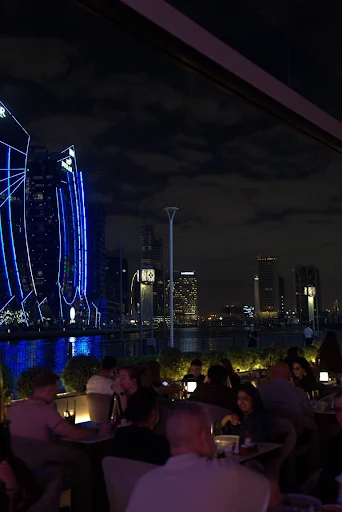
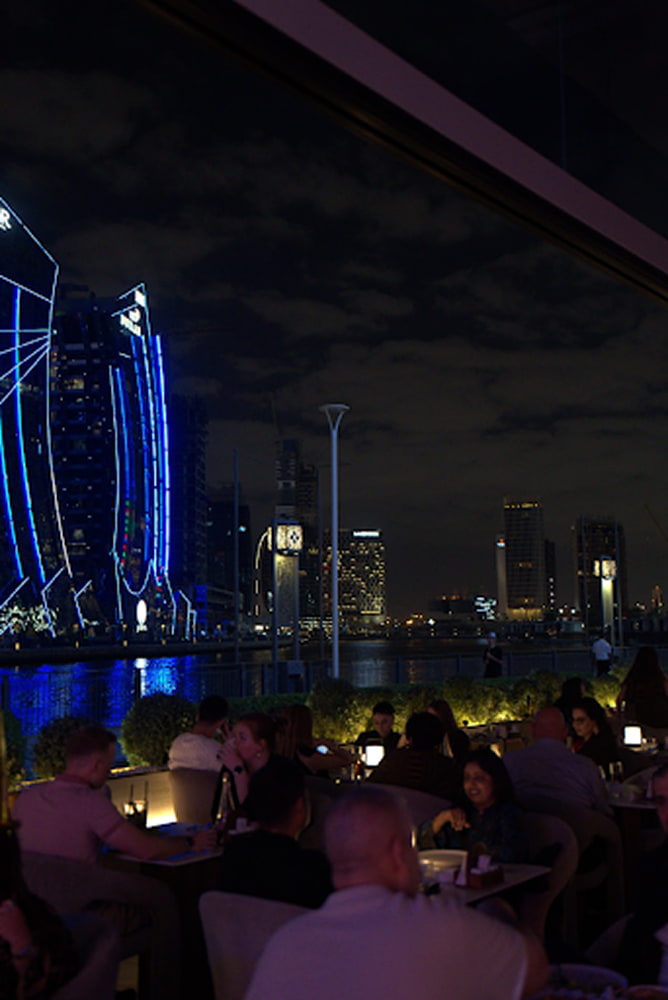
If the occasion calls for a canal-front setting in Business Bay, Babati hosts private evenings for families, companies, and celebrations, building menus around your table from thebest Lebanese restaurant in Dubai kitchen, with the terrace on the water. Call or message us on WhatsApp with the date and the numbers. We will walk you through the formats honestly, including the one not to book.