What makes Lebanese breakfasts so unique that travelers around the world continue to seek them out? To understand their importance, we must look beyond the food itself and explore the deeper story. Lebanese breakfast traditions are not just recipes passed down through families; they are reflections of history, culture, and heritage that connect generations.
From humble village tables to modern city cafés, Lebanese breakfast culture carries with it centuries of flavors, influences, and shared experiences. Every dish, from zaatar manakish to labneh with olive oil, tells part of the story of Lebanese culinary traditions and their enduring place in daily life.
The Roots of Lebanese Culinary Traditions
The history of Lebanese cuisine is shaped by geography and agriculture. Lebanon’s Mediterranean climate provided fertile soil for olives, wheat, grapes, and fresh vegetables.
Bread baked in communal ovens, olives pressed for oil, and herbs like thyme blended into zaatar became everyday staples. This reliance on natural, seasonal ingredients gave birth to breakfast dishes that were simple, nutritious, and deeply tied to the land.
This connection to nature is still clear today. Traditional Lebanese breakfast culture continues to prioritize freshness, with mornings often beginning with bread, dairy, and vegetables, foods that have been central to the region for centuries.
Influences from Middle Eastern Breakfast History
Lebanese breakfast traditions did not develop in isolation. Over the centuries, Lebanon’s location at the crossroads of the Middle East exposed it to countless cultural influences. From Ottoman culinary styles to Mediterranean flavors, each influence added new layers to Lebanese food heritage.
For example, the Ottoman Empire introduced methods of preparing meats and spices that influenced breakfast dishes such as lahm bi ajeen, a flatbread topped with spiced minced meat. At the same time, Mediterranean trade routes brought new flavors like olive oil blends and dairy varieties, enriching the Lebanese table.
These influences show how Middle Eastern breakfast history is interconnected. What makes Lebanese breakfast special is the way these diverse elements are absorbed and reshaped into something distinctly Lebanese.
Manakish: A Morning Legacy
One of the most enduring parts of Lebanese breakfast traditions is the mini pizza(Manakish). Often compared to a local twist on flatbread favorites, these rounds topped with zaatar, cheese, or vegetables have been a morning staple for generations.
Historically, families would gather around neighborhood ovens, bringing their own toppings for the baker to spread on freshly rolled dough. The communal oven became the heart of the community, where food and stories were shared.
This tradition illustrates how deeply these small breads are tied to Lebanese food heritage. They weren’t just breakfast; they were a ritual that brought families and communities together, a reflection of both culinary necessity and cultural identity. You can enjoy it with the best coffee in Dubai.
Dairy, Legumes, and Simplicity
Another cornerstone of traditional Lebanese breakfast culture lies in dairy and legumes. Labneh, a strained yogurt cheese, has been made in Lebanese households for generations. Its tangy flavor, enhanced with olive oil, has long symbolized the balance of health and taste.
Similarly, dishes like (fava beans) and balila (chickpeas) reflect the agrarian roots of Lebanese cuisine. Slow-cooked with lemon, garlic, and olive oil, these hearty meals show how Lebanese culinary traditions turned simple, local ingredients into nourishing breakfasts.
The enduring popularity of these dishes demonstrates the practical and cultural role they played throughout Lebanese history, affordable, healthy, and accessible to all.
Breakfast as a Social Tradition
To truly understand Lebanese breakfast traditions, we must also look at their social role. Breakfast in Lebanon was never just about eating; it was about connection. Families gathered around the table, often extending the meal into long conversations, storytelling, and planning the day.
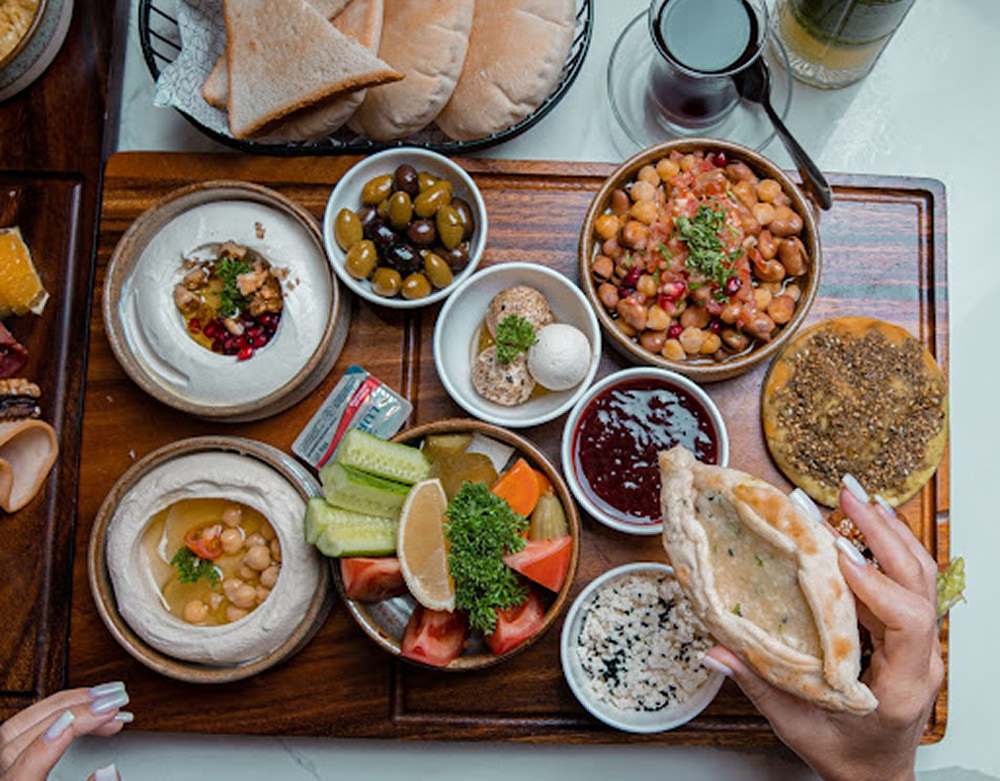
Even today, many Lebanese households preserve this spirit. The shared plates of bread, cheese, olives, and fresh vegetables embody the values of hospitality and togetherness that are central to Lebanese culture.
This reflects a broader theme in Middle Eastern breakfast history: meals as moments of bonding, where food becomes a tool for unity rather than mere nourishment.
The Role of Fresh Produce in Heritage
Lebanese breakfast is known for its emphasis on fresh produce. This tradition dates back to farming communities that relied on seasonal crops. Tomatoes, cucumbers, olives, and herbs were readily available, making them natural accompaniments to bread and dairy.
This focus on freshness is part of Lebanese food heritage and continues to distinguish the cuisine from many others. By keeping vegetables and herbs central to breakfast, Lebanese culinary traditions ensure that meals remain light, balanced, and deeply connected to the land.
Lebanese Bread: A Daily Tradition
Bread holds a special place in Lebanese culture and has been part of the morning table for centuries. Baked fresh in stone ovens, it was once prepared in villages where families shared communal bakeries. Simple ingredients like flour, water, and yeast created a staple that accompanied every meal. Over time, bread became more than food; it was a symbol of togetherness and survival. Even today, it remains the foundation of Lebanese breakfast, enjoyed with spreads, vegetables, or traditional flavors.
Evolution Into Modern Times
As Lebanon modernized, so did its breakfast culture. Urban bakeries and restaurants began offering wider menus, while traditional recipes remained at the core. Today, Lebanese breakfast dishes are served not only in family homes but also in cafes across the globe.
Yet even with modern twists, the essence of traditional Lebanese breakfast culture remains unchanged. Authenticity, freshness, and hospitality continue to define the experience. This blend of tradition and innovation ensures that Lebanese culinary traditions stay relevant while honoring their past.
How to Fully Enjoy Lebanese Breakfast Traditions
Take Time to Share
Lebanese breakfasts are designed with community in mind. Rather than serving single plates, the table is filled with a spread of small dishes, breads, and sides meant for everyone to taste. Sharing food isn’t just about variety, it’s about creating moments of connection.

Families linger at the table, friends chat over manakish, and stories are exchanged as plates are passed around. This slow, social style of eating reflects traditional Lebanese breakfast culture, where meals are a time to strengthen bonds, not just satisfy hunger.
Balance Savory and Sweet
The true charm of Lebanese breakfast traditions lies in the balance of flavors. A meal is rarely one-dimensional; it moves gracefully between savory and sweet. One bite may be of warm zaatar manakish, earthy and fragrant, followed by a spoonful of creamy labneh paired with sweet honey or jam.
This interplay creates a sensory experience that is both comforting and surprising. By mixing these flavors, you not only enjoy the food more but also experience the creativity and harmony that define Lebanese culinary traditions.
Pair with Tea or Coffee
No Lebanese breakfast feels complete without the right drink to accompany it. Ginger tea, refreshing and soothing, pairs beautifully with savory dishes like foul. Strong Arabic coffee, with its rich aroma and slightly bitter edge, complements both sweet and savory plates.
These beverages do more than quench thirst; they ground the experience, adding rhythm and warmth to the meal. Their presence at the table highlights the depth of Middle Eastern breakfast history, where food and drink have always been enjoyed together as part of a ritual.
Embrace Freshness
One of the hallmarks of Lebanese food heritage is the emphasis on fresh, seasonal ingredients. Vegetables like tomatoes, cucumbers, and radishes are never just side items; they are essential parts of the breakfast spread.
Olives, pickles, and fresh herbs brighten every bite, cutting through richer flavors and adding balance. To fully enjoy Lebanese breakfast traditions, make sure your plate includes these fresh elements. They bring color, crunch, and vitality, ensuring the meal feels both wholesome and satisfying.
Conclusion
The history of Lebanese breakfast is a story of culture, heritage, and community. For centuries, families gathered around village ovens, enjoying fresh bread, cheeses, and flavors that connected daily life to tradition. These meals were more than food; they were moments of togetherness passed down through generations.Today, experience this timeless tradition in Dubai. At Babati, enjoy the best Lebanese breakfast in Business Bay, offering authentic flavors, cultural heritage, and a true taste of history served fresh each morning. To reserve your morning table, call us today at (042 87 9544).